

By Coralie Lynch
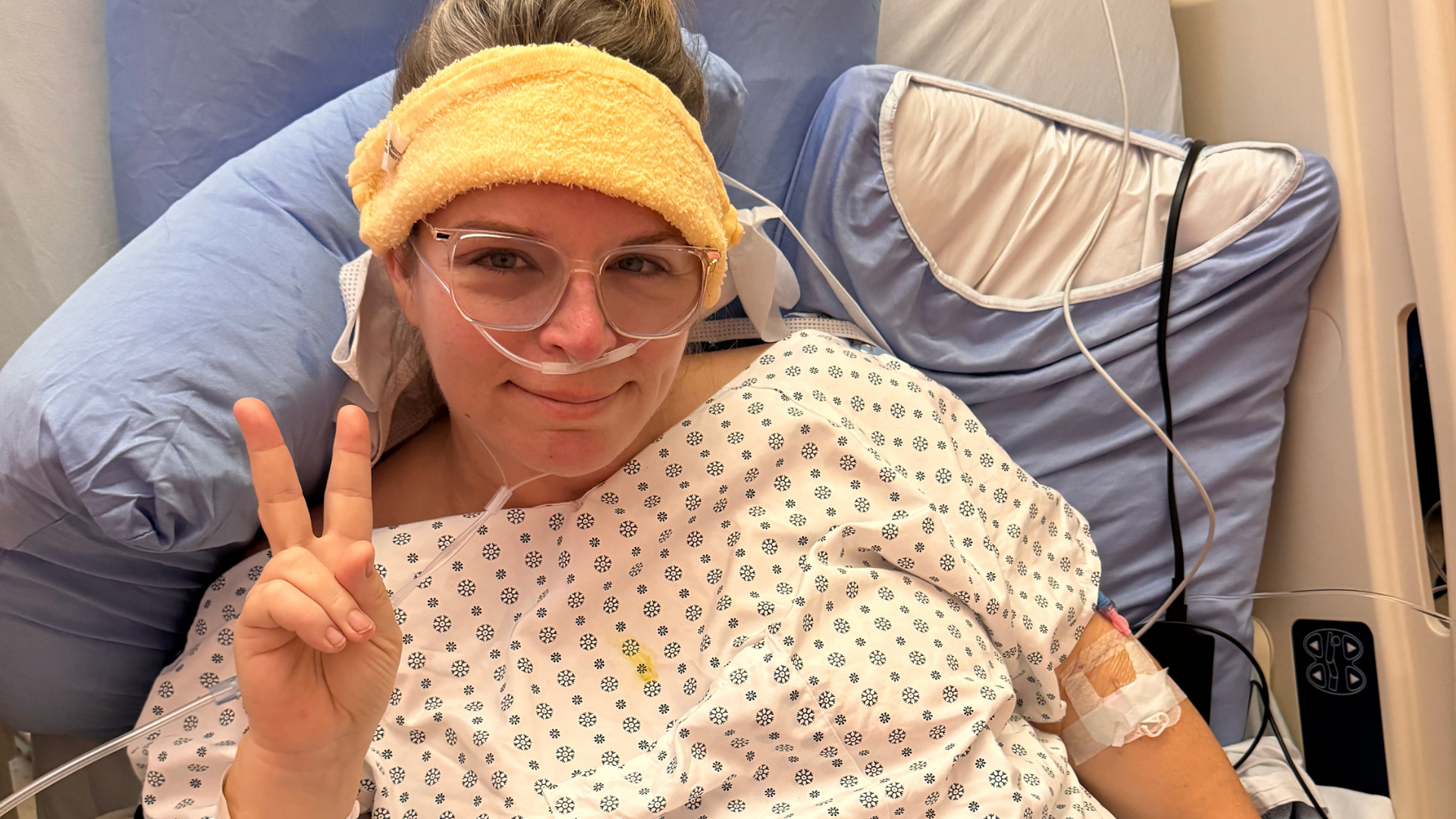
I didn’t ease into this chapter of my life. I got thrown into it at 1 a.m. on an operating table.
Thirty-six hours earlier, I was managing intense abdominal pain the way a lot of us do, trying to ride it out and convincing myself it wasn’t serious. I thought maybe it was an ovarian cyst. Annoying and painful, but survivable.
By 11p.m., I had a diagnosis: diverticulitis.
By 1 a.m., I was in emergency surgery.

My bowel had perforated. Infection had spread. I also had sepsis and peritonitis. I woke up with part of my colon gone and an ostomy bag attached to my stomach.
Just like that, everything changed.
At first, I didn’t fully understand how close I had come to not being here at all.
Then I learned the numbers.
About 30% of people with a ruptured colon don’t survive. If infection spreads into the abdomen, the odds get worse.
Mine had.
That realization didn’t come with clarity or wisdom. It came with a full emotional collapse. The kind that doesn’t feel cinematic or profound, just raw, disorienting, and heavy. The kind where your brain loops through worst-case scenarios you narrowly avoided.
If I had waited until morning, my husband might have woken up beside a wife who wasn’t waking up at all.
My kids might have lost their mom.
I’ve always thought of myself as someone who could handle things. Strong and capable. The one who keeps going.
This experience challenged that identity in a way I didn’t see coming. I didn’t realize how much I was carrying until my body forced me to stop.
We talk a lot about listening to our bodies, honouring them, respecting them, but I had been overriding the cues for a long time. Not dramatically, just in the little-every-day-ways that add up. By pushing through, minimizing, and delaying much needed rest.
I thought I was managing.
I wasn’t.
The early days after surgery were a blur of physical recovery and emotional whiplash.
One minute I could laugh, because yes, farting into a bag is objectively hilarious when you can hear it but not smell it, and the next minute I was staring at the ceiling wondering how my life had shifted so drastically overnight.
Humour didn’t cancel out the fear. It just gave it somewhere to breathe.
And there was fear.
Fear of my body, of what I couldn’t control.
Fear that I wasn’t as resilient as I thought I was.
Recovery wasn’t linear. Not even close.
It looked like I was making progress, followed by being slammed against a brick wall. It felt like I was given hope which was followed by despair. There were days when I felt like myself again, followed by days when everything felt heavy and pointless.
At one point, I described it as climbing a muddy mountain with no tools and no guardrails, slipping, falling, staring up at something that felt so far from my grasp and impossible to finish.
There were hours where I cried until I had nothing left within me. Where acceptance wasn’t empowering, it was just the only option.
This was my life.
I don’t get to control what happened.
I only get to control what I do next.
And then, slowly, almost imperceptibly at first, things began to shift.
Small wins.
A short walk.
A day without complications.
Learning how to manage the ostomy without it feeling overwhelming.

The first time I did a full appliance change (bag and flange), it took 30 minutes, accompanied by a lot of Googling, and then a full meltdown transpired.
Months later, I could do a complete bag change in under five minutes.
Progress didn’t feel dramatic. It felt quiet, repetitive, and earned.
But it was happening.
In the middle of all of this, there was one goal that kept pulling me forward:
The final Taylor Swift concert of the Eras Tour.
I had bought those tickets long before any of this happened. For a while, it didn’t feel realistic. I was dealing with anxiety about crowds, about energy levels, about the very real possibility of something going wrong in a packed stadium.
But I held onto it anyway, because sometimes you need something normal and joyful to remind you that your life is still yours.
Five weeks after emergency surgery, I went.
Not fearlessly, but determined.
I had backup supplies. Support from strangers who understood. People who made space for me, physically and emotionally. And a body that, despite everything it had been through, showed up for me.
That night wasn’t just about the music.
It was about me being there at all.
Singing, dancing, crying, laughing, fully aware that just weeks earlier, that version of me might not have existed anymore. It was proof that even in the middle of something hard, life doesn’t stop offering you moments. You just have to decide if you’re going to take them.
Living with an ostomy changed my relationship with my body in ways I’m still unpacking and learning about.
It forced me to slow down, pay attention, and accept help.
It forced me to let go of the illusion that I’m in control of everything.
It also showed me something I didn’t expect:
I can adapt. Not instantly or gracefully. But eventually.
There’s a moment in recovery where you realize you’re not just surviving anymore: you’re moving forward.
The hard days don’t disappear, but they get further apart. The fear doesn’t vanish, but it softens. The things that once felt impossible become routine.
And one day, you look back and realize:
You did it.
Not perfectly or without breaking down along the way. But you did it.
This experience stripped things down to what matters.
Being here, being with the people I love. Creating moments that mean something, whether that’s a quiet walk by the water or screaming lyrics in a stadium.
Because the truth is, more people walk this path and don’t come back from it than we like to think about.
I did. And that changes how you see everything.
My ostomy was temporary.
But what it taught me isn’t.
Nothing stays the same forever. Not the hard seasons, not the pain, not even the version of you that feels like it might not make it through.
Things change. You change.
And sometimes, in the middle of the mess, you find out you’re stronger than you ever needed to prove.
You just needed to survive long enough to see it.
Coralie lives in Surrey, BC
Find Coralie on Instagram: @coralietv and @thecheekyboo
Coralie’s Cheeky Boutiki – Canadian Love Shop
This story was sourced by Lisa Gausman, Ostomy Canada Senior Editor.
Disclaimer: The information shared by Ostomy Canada Society is for educational purposes only and is not a substitute for professional medical advice, diagnosis, or treatment. Every person’s ostomy experience is unique. Please consult your health care provider with any questions about your condition, care, or treatment plan.
